
Ostomates Hydration Guidance
There are multiple types of stoma and sometimes people need to adjust their hydration requirements, in the short term or for longer. Remember that not everyone with a stoma needs to change their eating and drinking habits.
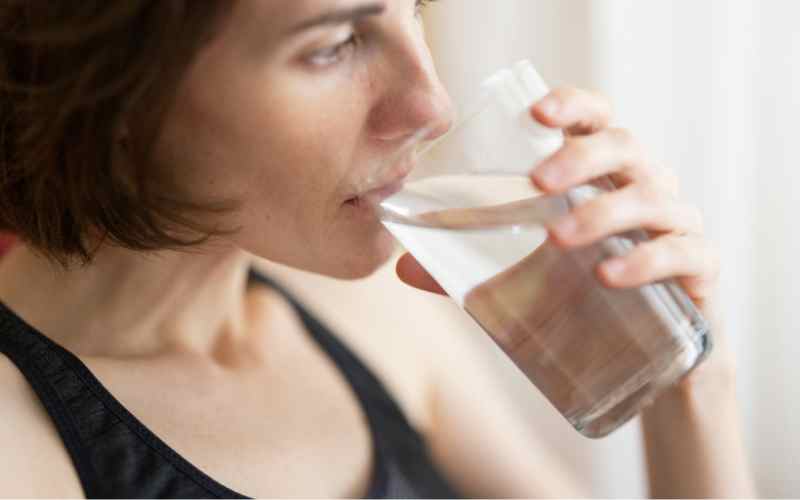
Image by Engin Akyurt, courtesy of Unsplash
Hydration is important for almost all aspects of our bodily functions. Being hydrated means having enough fluid for your body to work as efficiently as it can.
If you have a stoma, you’re likely to be more aware of the importance of hydration than the average person, given stomal losses. Approximately 50-60% of our body weight is water; for a female weighing 10 stone, that’s 5-6 stone in just water (~63.5kg and ~31-38kg respectively).
The water in our bodies helps transport nutrients, regulates our temperature and aids the removal of metabolic waste products.
Why Keeping Hydrated is so Important for Ostomates
After stoma surgery, especially for those with right-sided ileostomies or colostomies, the gut has to adapt and improve fluid absorption to minimise dehydration.
For people with urostomies, drinking enough fluids is especially important to prevent urinary tract infections (UTIs) and to minimise the risk of tubing or stoma blockages.
If our bodies lose too much fluid or we don’t consume enough, this can cause various problems that may require hospital treatment. From research, we know that of those who are re-admitted to hospital after stoma surgery, ~40% of these people are admitted for dehydration treatment.
To be as little as 1% dehydrated (that’s under-drinking by just ~500ml), can decrease both physical and mental abilities.
Recognising dehydration
Between 800-2000ml of urine a day is normal; this can be between 2-6 (mostly full) urostomy pouches. The urine produced soon after waking is usually darker yellow, otherwise urine should be coloured 1-3 according to the urine colour chart.
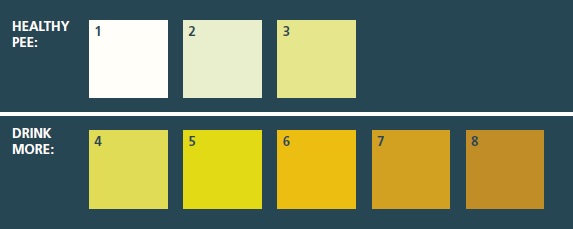
In the first few weeks after urostomy surgery, you will learn what is a normal daily urine volume for you. Other dietary factors can also change the volume of our urine, e.g. a higher volume of urine due to consuming lots of caffeine.
For colostomies, most people should pass formed stools and dehydration isn’t as likely. For ileostomies, 500-1500ml of a porridge-like consistency stool is normal.
For all bowel stomas, stool losses of over 1500ml/day is considered “high output” and is considered a high risk factor for dehydration, however having looser than normal bowel movements can still be dehydrating. It’s important to be able to recognise when you’re dehydrated to prevent nasty symptoms and health problems like UTIs.
Thirst is not a reliable marker of dehydration, it’s a symptom that happens after you are already dehydrated. Children and older adults can have a weaker thirst response to dehydration so it’s important to monitor the hydration of these people.
Common signs of dehydration
- Less frequent, a lower volume and darker urine
- Dry lips, mouth and eyes
- Feeling dizzy or lightheaded (especially on standing)
- Headaches
- Muscle cramps
Severe signs of dehydration
- Feeling unusually tired or confused
- A weak or rapid pulse
- Fits (seizures)
- Being very drowsy/unrousable
How much fluid is enough?
Most people need ~6-8 cups of fluid a day, this is ~1.8-2.4L or 3-4 pints. For those who lose excess fluid, either through sweating or with looser than usual stools e.g. jejunostomies and ileostomies, extra fluid is needed to replace these losses.
Normal bowel movements that are formed cause minimal fluid loss, but those with colostomies on their right-hand side, ileostomies or jejunostomies are likely to have looser or watery stools. Looser stools cause extra loss of fluid, but also causes loss of electrolytes such as sodium, potassium and magnesium too.
If you have higher fluid losses than the average person e.g. non-formed stools, it’s best to drink the recommended 6-8 cups of fluid a day plus choose saltier foods and ‘hydrating foods’ section – see ‘hydrating foods’ section.
Occasionally when someone has loose bowel movements, drinking more fluid can make them more dehydrated. If the bowels are emptying too quickly, there is not enough time to optimally absorb fluid as well as electrolytes. Losing electrolytes too quickly can cause imbalances in the blood, triggering problems like low blood pressure, muscle cramps or more dangerous issues e.g. an irregular heart rhythm.
If you’re passing large volumes of watery stools (over 1.5L/3 pints per day) then drinking more may not help and it’s best to speak with your Doctor or Specialist Nurse.
What counts as hydrating fluids?
Not all drinks are hydrating and some can actually contribute to dehydration. When looking for hydrating options, choose from the following:
- Water
- Well-diluted squash or cordial
- Fruit juice
- Smoothies
- Milk-based drinks e.g. milky decaffeinated coffee
- Sports or ‘electrolyte’ drinks
- Coconut water
Alcohol
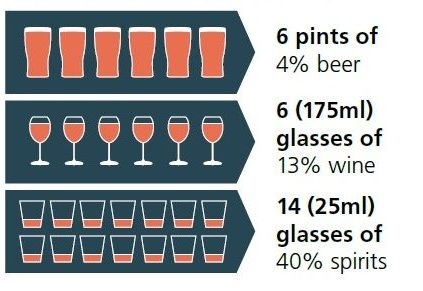
Alcoholic drinks increase urination and can over-stimulate the bowels, therefore alcohol cannot count as one of your hydrating 6-8 cups of fluids a day. It’s best to keep within the government’s recommendations of 14 units a week, spread across 4 or more days and having 2 days a week alcohol-free. A unit of alcohol is 1 x 25ml spirit measure e.g. gin, whereas a standard glass of ~12% abv. wine or regular strength beer is ~2 units.
This is what 14 units of alcohol looks like:
Fizzy, sugary drinks
There is mixed research on the hydrating effects of fizzy, sugary drinks like cola and lemonade, and it is not specific to those with stomas. We absorb fluid from our gut into our blood through osmosis, where water will move from the least concentrated fluid to the greatest concentration i.e. from our guts to our blood.
Sugary drinks, including fruit juice or smoothies, are ‘hypertonic,’ meaning that they have a higher osmolality (concentration) compared to our blood. Hypertonic fluids can be harder to absorb, leading to water leaving our blood and entering the gut and causing looser stools and fluid and electrolyte loss. It’s best to choose ‘hypotonic’ (less concentrated) or ‘isotonic’ fluids (a similar concentration to our blood) most of the day.
Electrolyte drinks
You shouldn’t need to choose sports or electrolyte drinks most of the day, but when it’s hotter weather, or after sweating, you may need to drink more because of the electrolyte and fluid losses. Sports drinks labelled as ‘electrolyte’ or ‘rehydrating’ can be helpful, but be careful, as they sometimes contain lots of sweeteners, which can cause looser stools. If you do choose to consume sports or electrolyte drinks, have ~500ml either during or after the heat/sweating, or throughout the day, and choose other hypotonic/isotonic drinks for the rest of that day.
Hydrating Foods
Hydrating fruits and vegetables
- Melon
- Apple
- Grapefruit
- Cucumber
- Berries
- Courgette
- Bell peppers
- Tomatoes
- Cauliflower florets/heads
Hydrating fruits and vegetables tips
- A portion of fruit is ~80g or an amount that fits comfortably in a curled handful. Unless told otherwise, have up to 2 portions at a time to reduce consuming too much sugar.
- With bowel stomas, take care of food with skins, pips, seeds or fibrous/tough textures as these can be more difficult to digest.
Other hydrating foods
- Cottage cheese
- Yoghurt and other puddings
- Soups or broths
- Sauces or gravies
- Ice lollies
- Jellies
Hydrating food tips
- To add nutrition while reducing calories and salt, make your own sauces from lower-fat plain yoghurt and add your own flavourings, e.g., garlic powder, tomato paste, and dried herbs.
- Eat shop-bought ice lollies in moderation as a treat food as they’re high in sugar.
- Choose ice creams over ice lollies if you need help gaining weight.
- Some jellies are high in sugar; others contain lots of sweeteners. Some people have gut sensitivities to sweeteners; everyone’s tolerance is individual, so see how you manage.
Hydrating Foods Table
| Food or drink and measure | Approximate fluid provided in ml |
|---|---|
| 1 mostly-full pint glass | 550 |
| 1 standard-sized bottle of water | 500 |
| 1 can of drink | 330 |
| 1 mostly-full mug | 300 |
| 1 mostly-full tumbler | 250 |
| Tomato sauce portion e.g. with pasta (1 full mug) | 240 |
| ½ pint measure | 225 |
| Medium bowl of soup (½ a can, ~200g) | 170 |
| Milk in a medium bowl of cereal | 150 |
| 1 medium apple (~160g) | 140 |
| 1 standard pot of custard or rice pudding (~150g) | 120 |
| 1 standard-sized pot of yogurt (~125g) | 110 |
| 1 standard pot of jelly (~125g) | 110 |
| 1 handful of cooked cauliflower florets or peeled courgette (~80g) | 75 |
| 3 tbsp cottage cheese (~90g) | 72 |
| 1 handful of berries, grapefruit or melon without rind (~80g) | 70 |
| Standard gravy portion (¼ of a mug, ~75g) | 65 |
| Cucumber piece (the length of your thumb, ~60g) | 57 |
| 1 standard-sized ice lolly (~80g) | 55 |
| Standard cheese sauce portion (¼ of a mug, ~75g) | 50 |
| 1 standard ice cube | 25 |
Hydrating Swaps to Increase Hydration – Meal Plan Example
| Original low-irritant meal plan | Hydrating swaps |
|---|---|
| 2 slices of white toast with butter, a peeled apple, mug of tea. | 1 bowl of puffed rice cereal with 150ml milk, a peeled apple, mug of tea. |
| Cereal bar | Cereal bar, pot of jelly and a tumbler of squash (with 3 ice cubes). |
| 1 large white roll, cheddar cheese, 2 peeled satsumas, tumbler of water. | 1 large white roll with cottage cheese and peeled cucumber, 1 handful of melon, tumbler of water with 3 ice cubes. |
| 1 banana | 1 medium pot of yogurt, tumbler of squash (with 3 ice cubes). |
| Peeled roast potatoes, roast chicken, peeled and cooked parsnip and carrots. Tumbler of squash. Tinned peaches. | Mashed potato (made with added milk), roast chicken, peeled and cooked courgette and carrots, gravy. Tumbler of squash (with 3 ice cubes). Tinned peaches and a home- made ice lolly. |
| Total fluid: ~700ml | Total fluid: ~2000ml |
Salt Tips
People who have difficulties maintaining their electrolyte levels, especially sodium/salt, will likely already know this from their care in hospital after their surgery. For an easy way to top up your sodium, you can add salt when cooking or at the table – add up to 1 level teaspoon per day (spread across meals) and only add it to your own food. Too much salt can be harmful to some people, especially children and older adults.
People with jejunostomies, ileostomies and possibly other bowel-stomas may find choosing saltier foods can help keep them more hydrated. Saltier foods are more likely to make you feel thirsty and encourage you to drink, the same can happen with spicy foods. When you drink with a salty food, the salt can also help you absorb the fluid.
Salty foods/condiments
- Cheese
- Crackers
- Salted popcorn
- Pre-made sauces or soups
- Gravies
- Crisps
- Savoury snack mixes, e.g. Bombay mix or pretzels
- Salted spreads, e.g. ‘salted’ margarine/butter
- Processed foods, e.g. sausages, battered/crumbed chicken and ready meals
High Output Stomas
High output stomas have traditionally been classed as any bowel-stoma with outputs over 1500ml/day; it is this volume and over which has the most risk of causing dehydration and electrolyte imbalances.
However, after 6-8 weeks of your surgery your stoma output will have begun to settle and within 6-12 months you will know what your average daily volume is. Any changes to your normal daily output where you are symptomatic can also be ‘high output’ and require extra intervention. The highly specialist advice for those with ‘high output’ stomas can seem counter- intuitive, especially compared to other hydration advice for ostomates.
It’s important to remember that every person is different and may have a different anatomy to other stoma patients or their gut may not have adapted as well to absorb fluid, however anyone passing larger than normal volumes of stool or urine could also be said to have ‘high output stomas’.
High-output stoma hydration tips
- Drinking ~10-15 minutes before a meal or ~30-60 minutes after eating.
- Reducing the fibre and irritants in your meals and fluids.
- Choosing hydrating foods – see the hydrating foods section.
- Increasing your salt; choose saltier foods e.g. cheese, crackers or sauces and also adding salt to meals (while cooking or at the table).
When to Seek Emergency Help
If someone with a stoma experiences any of the following, we recommend you call the NHS helpline on 111 or take them to your local Accident and Emergency department as soon as possible.
Emergency symptoms
- Significant decrease in amount of urine and darker colour
- Cramping, pain or swelling at the stoma site
- Nausea and vomiting
- A weak or rapid pulse Fits (seizures)
- Being very drowsy/unrousable
Seeing a Registered Dietitian (RD)
RDs train for years to learn medical nutritional therapy, which is the science of tailoring nutrition for specific health concerns including stoma care. GPs and Specialist Stoma Nurses (SSNs) undergo some nutrition training and can offer “first-line” or immediate advice and support. If you have multiple dietary difficulties, including unintentional weight-loss, distressing ongoing stoma symptoms or other health conditions then it’s best to see an RD.
NHS
Many hospitals have Dietitian outpatient clinics, some areas of the country have community Dietitian clinics at places including GP surgeries. NHS Dietitian teams usually accept referrals from:
- Your GP
- Your hospital
- Doctor hospital-based SSNs
Your healthcare professional may not automatically refer you to an RD and you may have to ask them to.
Non-NHS
Some NHS referral processes for Dietitians can take weeks or months; you may want to seek a non-NHS RD. The British Dietetic Association has an online register you can use to find the contact details of RDs near you; prices and services vary so don’t be afraid to ask questions.